Some rust is normal
Ontario's Passenger / Light-Duty Vehicle Inspection Standard, which safety inspectors follow, says it directly: some rust and corrosion on the outer surface of exposed metal parts is normal. It adds that when an excessive amount of rust visibly reduces the thickness of the material, structural deterioration is possible.
So orange surface rust on an exhaust hanger or a suspension arm is not the same as a rocker panel you can push a finger through.
What the standard rejects: frame and subframes
For the frame, rails and mounts, the standard rejects parts that are perforated or separated due to corrosion between the mount and the frame member, or rusted or corroded to a depth sufficient to become weakened.
Cross members and subframe assemblies are rejected if they are cut, notched, perforated, rusted or corroded to a depth sufficient to cause weakness, or repaired with material or methods that don't meet the manufacturer's or industry standard.
What the standard says about the floor
Holes in the floor from rust can be repaired, but only if the hole does not extend into a structural area of the floor such as seat-belt anchors, seat supports or rocker panels. The standard also limits the size of the repair and rules out some repair methods, such as pop rivets.
In plain terms: a patched hole in a floor pan can be acceptable, but rot around the seat-belt anchors, seat mounts or rocker panels is a much bigger problem.
Where to look before you buy
- Rocker panels below the doors, inside and out
- Wheel arches and the lower edges of the fenders
- Door bottoms, the trunk floor and the spare-tire well
- Subframes and suspension mounts under the car
- Brake lines and fuel lines along the underbody
- Fresh undercoating or new paint in only one spot, which can hide rust
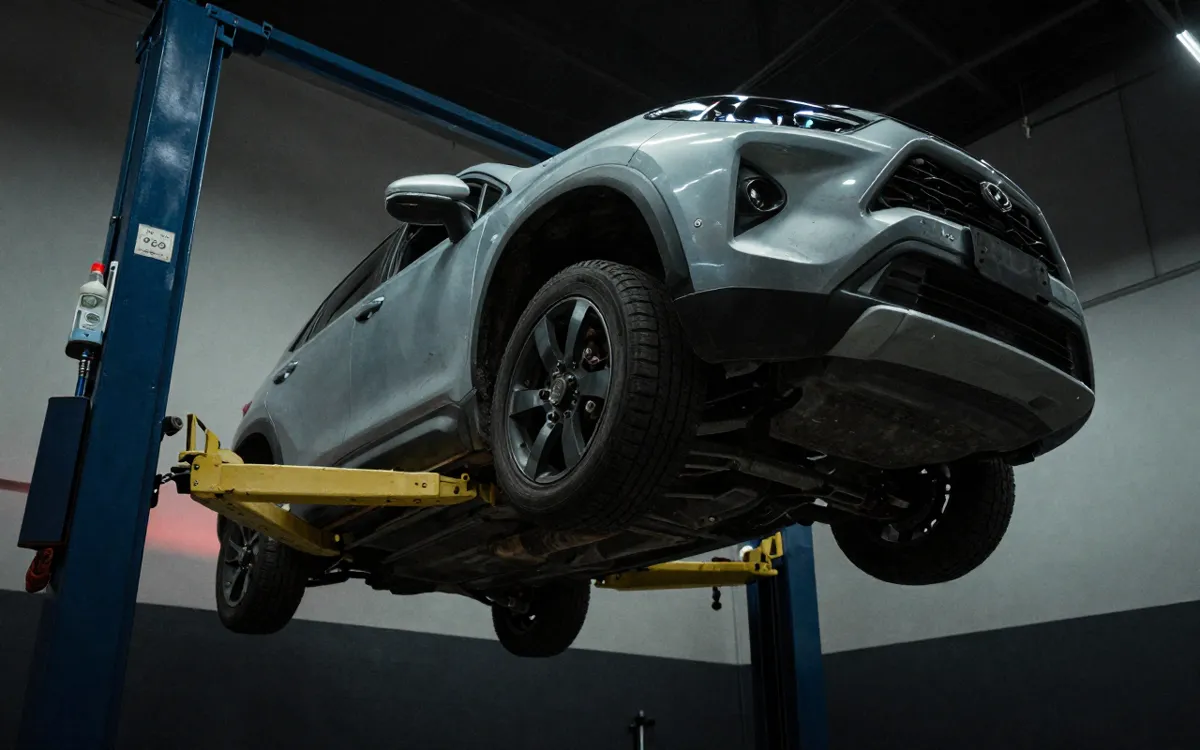
Get it on a hoist
Most of the rust that matters is underneath, and you can't see it properly in a driveway. A pre-purchase inspection on a hoist shows the frame, subframes and lines in a few minutes. Ours is $100 & up, and we're a licensed Ontario safety inspection station.
If you're buying from a private seller, the seller doesn't have to give you a safety certificate, so an independent check before you pay is the cheapest protection you can buy.
Sources
Good to know
This is general information, not a safety inspection. It quotes the province's inspection standard as published on ontario.ca in October 2026. Only a licensed inspector who examines the vehicle can say whether it passes.