
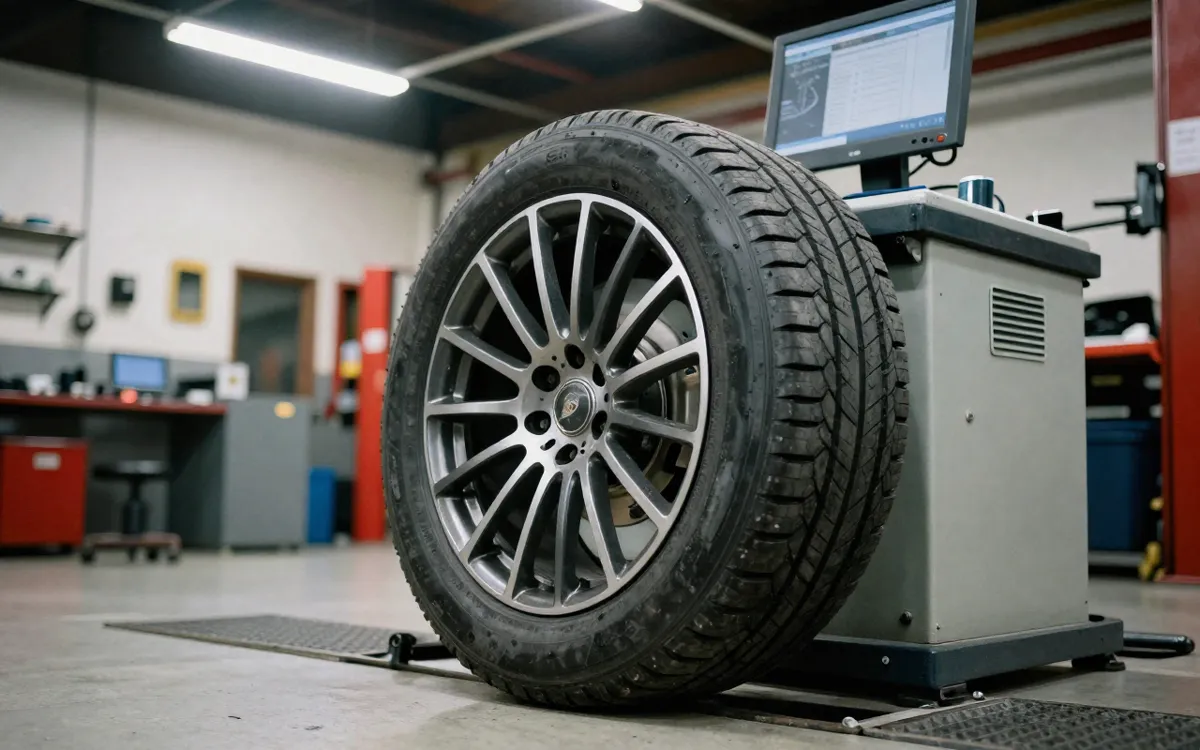
Shakes at highway speed
- Wheels out of balance, often right after a tire swap or after a balance weight falls off
- A bent wheel from a pothole or curb
- A tire with a bulge, a separated belt or flat spots
- Worn suspension or steering parts, which make any imbalance feel worse
Shakes or pulses when you brake
This usually comes from the brake rotors. Uneven rotor surfaces make the steering wheel or brake pedal pulse as you slow down. It can also be a sticking caliper. Have it checked, because it affects how well the car stops.
Shakes at idle or at a stop
- An engine misfire from a worn spark plug or ignition coil, often with a check engine light
- A worn engine or transmission mount letting the engine move too much
- A rough-running engine on a cold morning that settles once it warms up
What to do
A sudden new shake, a shake with a flashing check engine light, or a bulge on a tire are reasons to stop and get it checked before driving further. For a mild highway shake after a tire swap, a wheel balance check is usually the first step.
We road-test the car, check the tires, wheels, brakes and suspension, and read any engine codes before we recommend anything.